A Wrinkle in Time Book Why This Classic Still Captivates Readers
Overview
Introduction: Why A Wrinkle in Time Still Captivates Readers
Some books grab you from the first page and never let go. A Wrinkle in Time is one of those rare stories.

It mixes science, fantasy, and deep questions about good and evil in a way that feels fresh even today. First published in 1962, the book won the 1963 Newbery Medal, one of the biggest awards in children’s literature. The ALA recognized it as a distinguished contribution to children’s books, and it has stayed popular for over sixty years.
Here’s the thing: finding meaningful children’s books that also make you think is tough. A lot of kids’ stories are fun but don’t challenge the mind. Other books for young readers can feel too simple or too shallow. Parents and young readers alike often struggle to find stories that mix imagination with real depth. A Wrinkle in Time solves that problem. It follows Meg Murry, her brother Charles Wallace, and their friend Calvin as they travel through time and space using a tesseract. They face a dark force and learn about courage, love, and standing up for what is right.
This article explores the plot, themes, and cultural impact of this beloved novel. We’ll look at why it remains a must-read in 2026, and how it compares to other great stories like The Book Thief, Hunger Games, Divergent, and the works of Terry Pratchett. If you love timeless books that keep giving, you might also enjoy our roundup of why timeless classic novels are the best books to read in 2026. Let’s dive into the world of Madeleine L’Engle and see what makes A Wrinkle in Time so special.
The Story at a Glance: Plot and Core Concepts
You know that feeling when you are up late at night and a storm is raging outside? That is exactly how A Wrinkle in Time begins. Meg Murry is an awkward teenager who does not fit in at school. Her father has been missing for a long time. Then, on a dark and stormy night, a strange old woman named Mrs. Whatsit shows up at her door.
Mrs. Whatsit tells Meg and her mother that a "tesseract" is real. A tesseract is not just a made up word. In the book, it is a way to travel across space and time by folding the fabric of the universe like a piece of paper. You can go from one planet to another in an instant. As SparkNotes explains, it is a sort of "wrinkle" in space and time. The characters call it "tessering."
Meg, her super smart little brother Charles Wallace, and a kind classmate named Calvin O’Keefe decide to use the tesseract.
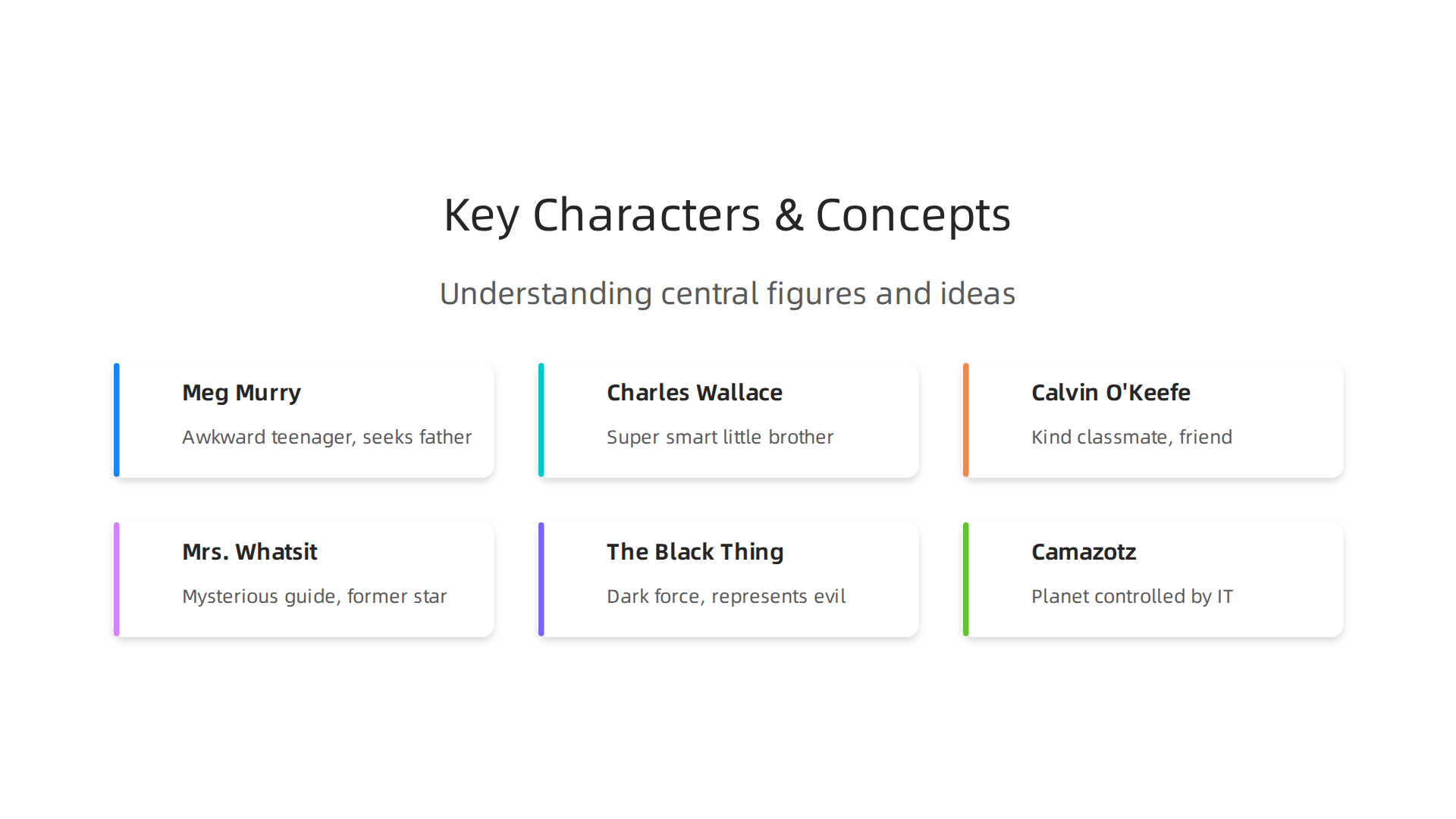

They want to find Meg’s father. But they are not alone. Three mysterious guides help them: Mrs. Whatsit, Mrs. Who, and Mrs. Which. These three beings are not human. Mrs. Whatsit used to be a star, and she can change her shape. They have a mission. The kids must rescue Mr. Murry from a dark force that is spreading across the universe.
This dark force is called the Black Thing. It represents evil. But the real danger shows up on a planet called Camazotz. There, a giant brain named IT controls everyone. Everyone on the planet looks, acts, and thinks exactly the same. They march in perfect rhythm. There is no individuality. If you are different, IT punishes you.
Here is the heart of the story. A Wrinkle in Time is an allegory for the fight against conformity. It says that being different is a strength, not a weakness. Meg learns that her flaws her temper, her insecurity are actually what save her. The book shows us that love is the most powerful force in the universe, stronger than a giant brain or a darkness of shadows.
If you love stories that celebrate individuality and adventure, you might also enjoy our guide on how to find books for kids that they will actually love reading. It will help you discover more gems like this one. Up next, we will look at the unforgettable characters that make this book so special.
Literary Significance: Awards, Bans, and Lasting Impact
When A Wrinkle in Time first came out in 1962, it changed children’s books forever.
The very next year, in 1963, it won the prestigious John Newbery Medal. The American Library Association gives this award to the most outstanding contribution to American children’s literature. Madeleine L’Engle’s book was a total surprise winner because it mixed science fiction, fantasy, and deep questions about good and evil. Back then, most people thought sci-fi was just for boys or for adults. This book proved them wrong.
The official Madeleine L’Engle website notes that the book "celebrated its 50th anniversary in 2013 and continues to thrive." It also won the Sequoyah Book Award and the Lewis Carroll Shelf Award, and was runner-up for the Hans Christian Andersen Award, according to Wikipedia. But the Newbery Medal was the big one. It opened the door for other genre-bending books for young readers. Without A Wrinkle in Time, we might not see series like Hunger Games books or Divergent books today. They all share that same fight against a system that wants everyone to be the same.
Here is the twist. This very same book has also been one of the most challenged and banned books in schools and libraries across the United States. Why? Some people complained about its religious themes, like the way it talks about a cosmic battle between light and dark. Others disliked how it portrayed authority figures and questioned conformity. The American Library Association often lists it among the top 100 most challenged books. This only shows how powerful the story really is. A book that makes people uncomfortable enough to ban it is probably saying something important.
Despite the bans, the book has stayed alive for decades.

It ranks on nearly every "top 100 children’s books" list from teachers, librarians, and educational groups. Time Magazine even named it one of the 100 best fantasy books of all time, as seen on Barnes & Noble. It paved the way for other deep, thoughtful stories like The Book Thief, which also explores love and loss in the face of darkness. And for fans of grown-up fantasy, it influenced authors like Terry Pratchett, who mixed smart ideas with wild imagination.
The lasting impact of the a wrinkle in time book is simple: it taught young readers that being different is your superpower. It said that love is stronger than any dark force. And it proved that children can handle big ideas. If you love stories that stick with you for a lifetime, check out our guide on why timeless classic novels are the best books to read in 2026. It will help you find more books that matter just as much.
Themes That Resonate: Good vs. Evil, Individuality, and Science
So what makes a wrinkle in time book so powerful that it wins awards, gets banned, and still matters in 2026?
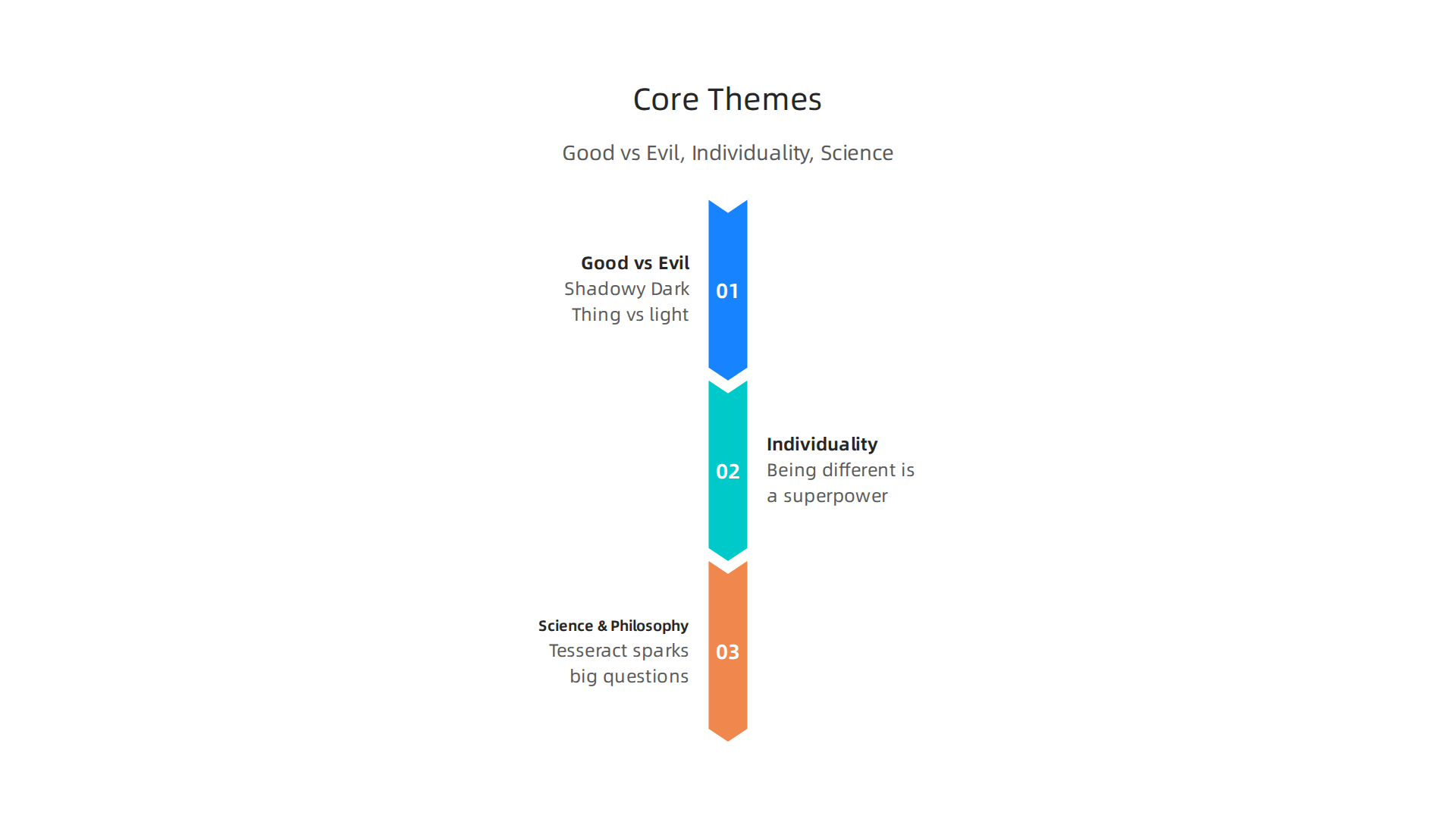
It is the way L’Engle weaves together three big themes that hit readers right in the heart.
The Dark Thing: Fighting Evil and Ignorance
The main enemy in this story is not a person with sharp teeth. It is a shadowy force called the Dark Thing. L’Engle uses it as a metaphor for evil, ignorance, and anything that tries to dim the light in the world. Meg Murry, the main character, has to face this darkness head on. According to SparkNotes, she is "a curious yet misunderstood adolescent who defeats the antagonistic forces of evil around her." That is a huge job for a girl who thinks she is just awkward and weird.
The Dark Thing represents everything that wants people to stop thinking for themselves. It feels a lot like the controlling systems you see in modern stories like the hunger games books or divergent books. Those dystopian worlds also punish people who ask questions. L’Engle was way ahead of her time in showing that the real battle is not with monsters. It is with the forces that want to erase your mind.
Being Different Is Your Superpower
Here is the heart of the book. Meg Murry does not fit in. She struggles in school. She has a temper. She wears glasses and braces. Sound familiar? According to a GitMind analysis, the story follows "a little girl named Meg Murry [who] searches for her missing father." But the real search is about finding herself.
L’Engle shows that conformity is a kind of death. On the planet Camazotz, everyone thinks and acts exactly the same. It looks calm on the surface, but it is horrifying underneath. Meg’s quirks are not flaws. They are what save her. Her stubbornness, her love for her brother Charles Wallace, and even her tears become weapons against the darkness. The EBSCO character analysis notes how the story "highlights themes of individuality, family dynamics, and the struggle against oppressive forces." In a world that often tells us to blend in, this book screams that standing out is the only way to win. A Scribd analysis even compares how Meg and Charles Wallace use their very different personalities to tackle the same problem. It proves there is no single right way to be strong.
Science Meets Philosophy
L’Engle did something bold. She mixed real science with deep questions about life. The tesseract is not just a cool word. It is based on the idea of a fifth dimension and quantum physics. She used this science to ask big questions. What is time? What is space? How are we all connected?
The book treats young readers like they are smart enough to handle these ideas. And they are. By weaving science into the story, L’Engle showed that science and faith do not have to fight. They can work together to explain the universe. The Academic Publishers journal analysis explains that Meg’s "interdimensional journey mirrors her internal struggles." The science fiction is not just a backdrop. It is the vehicle that lets Meg grow.
This blend of science and emotion is what makes the book stand out from other fantasy stories. While terry pratchett books use humor and the book thief uses history, L’Engle uses physics to explore the soul. It is a rare gift.
These themes help explain why the book has lasted so long. If you want to share this magic with a young reader in your life, check out our guide on how to find books for kids that they will actually love reading. It is full of tips to help the next generation fall in love with stories that matter.
Character Analysis: Meg Murry as a Relatable Heroine
You already know that Meg Murry is not your typical hero. She does not swing a sword or cast a spell. But that is exactly what makes her journey so powerful. Let us look closer at her growth, her family, and the friends who help her along the way.
Meg starts the book feeling worthless. She is bad at school, she has a temper, and she feels ugly. But L’Engle gives her a quest that only she can finish. She has to rescue her father and save her brother.
According to a SparkNotes analysis, Meg "defeats the antagonistic forces of evil around her." She uses the very things she hated about herself: her love, her anger, and her stubbornness.
The Academic Publishers journal notes that her "interdimensional journey mirrors her internal struggles." As she travels through space, she learns to accept who she is. This is why young readers love her. She proves that you do not need to be perfect to be a hero. You just need to care enough to keep going.
Charles Wallace is a five-year-old prodigy. He reads minds and understands complex ideas. But he also has deep vulnerabilities. He is so smart that he is naive. He almost gets eaten by the evil IT because he thinks he can understand it without getting hurt. The Scribd analysis compares how Meg and Charles Wallace use their "contrasting abilities… to tackle the same problem." Meg has to save him with something he does not understand: love.
Calvin O’Keefe is the popular kid who feels like an outsider. He fits in at school but not at home. He immediately sees something special in the Murry family. He becomes the bridge between Meg and the world. He is the friend who believes in her when she cannot believe in herself.
This shows that everyone, even the "cool" kids, can feel lonely. And that real friendship means supporting someone through the hard stuff.
Here is what makes this book special. In 1962, characters like Meg and Charles Wallace were almost never seen. Meg has what we might now call ADHD or dyslexia. She is bright but cannot focus on boring tasks. Charles Wallace is autistic-coded. He does not connect socially and speaks formally.
The EBSCO character analysis highlights "themes of individuality, family dynamics, and the struggle against oppressive forces." The Murry family is weird, and they are okay with that. Their mother is a scientist. Their father is a genius.
For a neurodivergent reader in 2026, this representation is incredibly validating. It tells them that being different is not a bug. It is a feature. As the GitMind analysis says, the story is about Meg searching for her father. But the deeper search is for a place where she belongs. She finds it in the acceptance of her own unique self.
These characters are why a wrinkle in time book feels so alive even in 2026. They stick with us because they feel real. They struggle with real problems. They do not have super strength. They have love, grit, and the courage to be different.
If reading about the Murry family makes you want to explore more heartfelt stories about unique characters, check out our recommendations for books like Kate DiCamillo for your next heartfelt read. DiCamillo writes with the same warmth and respect for young readers that L’Engle mastered.
The Science Behind the Fiction: Tesseracts and Physics
You might think the idea of folding space to travel across the universe is pure imagination. But here is the cool part. In A Wrinkle in Time, the tesseract is not just a made up word. It is based on real math.
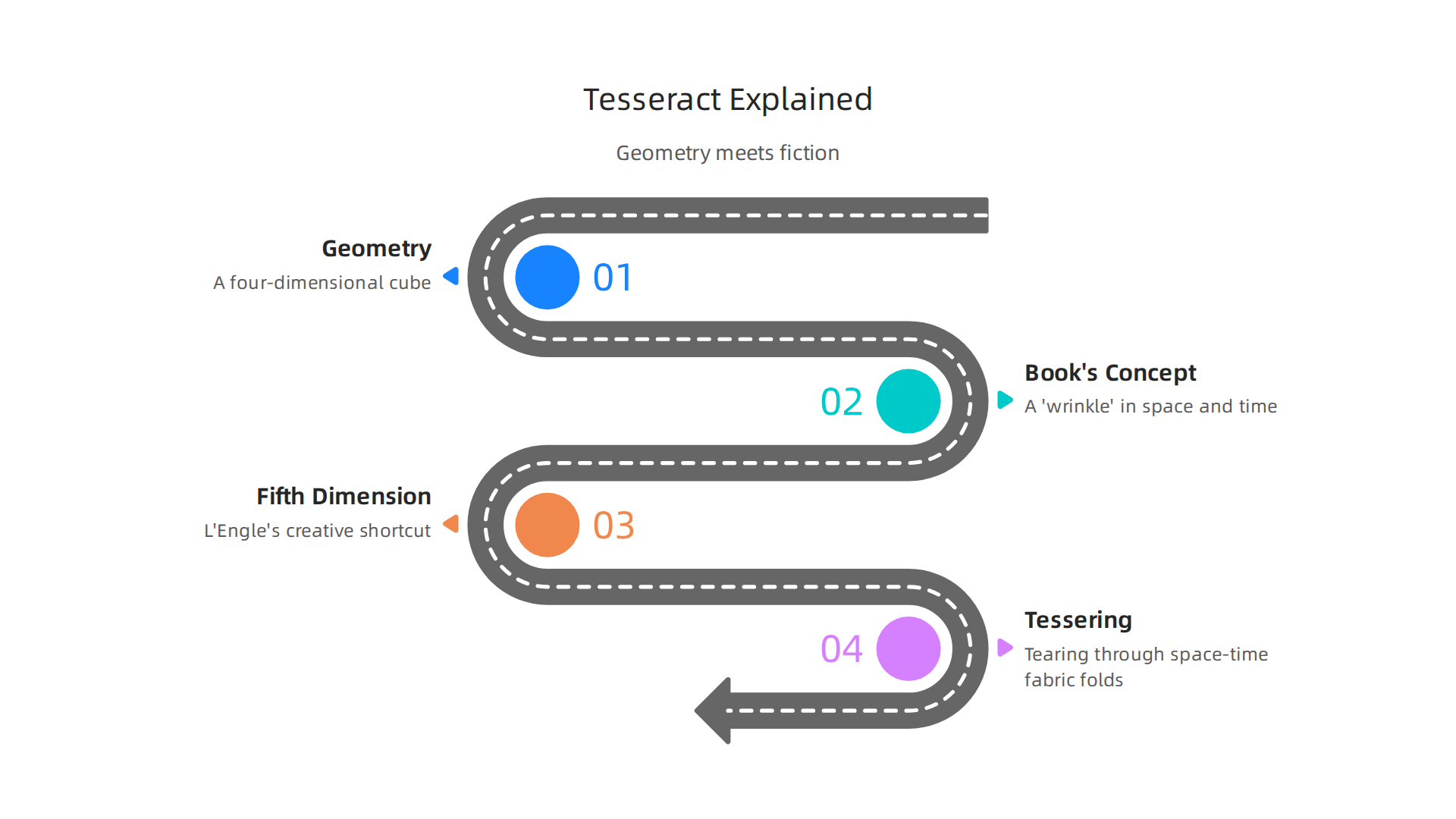
A tesseract, in geometry, is a four dimensional cube. It is hard to picture because we live in three dimensions. But mathematicians have studied it for over a century. In the book, Mrs. Whatsit explains it as a "wrinkle" in space and time. She says it is the fifth dimension. This is where L’Engle took a creative shortcut. According to the Study.com lesson, the tesseract in the story "also symbolizes the importance of science and Meg’s journey to accepting herself." So it is both a travel method and a metaphor.
The real science is a bit different. As GeekMom explains, "A tesseract, according to the Mrs Ws, is the fifth dimension. Not this one, the dimension you get if you square the fourth dimension, aka Time." In strict mathematics, a tesseract is actually a fourth dimensional object, not the fifth. L’Engle shuffled the numbers to make the idea easier for young readers to grasp. The Brown University math page points out this discrepancy. But that does not take away from the magic.
What L’Engle did brilliantly was take a complicated concept and turn it into something you can almost feel. "Tessering," as the ThriftBooks article describes it, is "tearing through the space-time fabric folds to travel to other worlds." That imagery sticks. It makes you wonder about the universe in a new way.
For generations of readers, this book has sparked a love for physics and mathematics. Kids who read about tessering grew up to study hyperspace theory. Adults in 2026 still remember the moment they first heard Mrs. Whatsit talk about folding time. This is why A Wrinkle in Time is not just a story. It is a gateway.
If you love stories that mix science with deep heart, you will want more books that stand the test of time. Check out our guide to why timeless classic novels are the best books to read in 2026 for more recommendations that blend imagination with lasting meaning.
The tesseract may be a simplified version of higher dimensional math. But it opened the door for millions of readers to believe that the universe is bigger, stranger, and more wonderful than they ever imagined. And that is the real magic.
A Wrinkle in Time in Popular Culture: Adaptations and References
From the pages of a 1962 novel to the big screen in 2026, A Wrinkle in Time has traveled far. After you learn about tessering, you start seeing it everywhere. That is the mark of a true classic.
The most famous version of a wrinkle in time book came in 2018. Disney turned it into a big budget movie. The cast was amazing. Oprah Winfrey played Mrs. Which. Reese Witherspoon played Mrs. Whatsit. Mindy Kaling played Mrs. Who. Rotten Tomatoes noted it grossed over $100 million in the US alone. Worldwide, it made about $132.7 million, according to box office data.
But here is the thing. Movies cost a lot to make. Even with all that money, reports show Disney lost nearly $70 million on the film. That sounds bad. But it also means millions of people saw Meg Murry’s story on the big screen. They saw the colorful celestial wonderlands, as one review put it. For many, it was their first trip into the tesseract.
Before Oprah and Reese, there was a 2003 TV film. It did not have the same budget. But it showed that people really wanted to see this story come to life.
You also find winks to A Wrinkle in Time in other places. If you watch The Simpsons, you might catch a mention. Doctor Who has played with similar ideas. And if you love the mix of science and heart in this book, you probably also love the hunger games books, the book thief, terry pratchett books, or divergent books. They all take big ideas and make them personal.
The story does not just live on screen. You can buy graphic novel versions of A Wrinkle in Time. These bring the art of tessering to a new generation. There is merchandise, like t-shirts and journals, for super fans. The book is still in print and widely read in schools.
If you have ever felt lost trying to find your next read, do not worry. Whether you loved the movie or the book, there are plenty more worlds to explore. Check out our guide on how to find books for kids that they will actually love reading. It will help you pick the next adventure, just like A Wrinkle in Time.
Summary
A Wrinkle in Time remains a landmark middle‑grade novel that blends science fiction, fantasy, and moral questioning to tell Meg Murry’s journey to rescue her father and confront a cosmic dark force. This article walks through the plot, key characters, and the book’s central themes — individuality over conformity, the power of love, and the imaginative use of scientific ideas like the tesseract. It also reviews the novel’s awards and controversies, explains why it has been both celebrated and challenged, and looks at how it influenced later YA and fantasy works. Readers will get clear character analysis, a simple breakdown of the book’s science, and an overview of adaptations, plus guidance on finding similar books for young readers. Overall, the piece explains why the novel still resonates in 2026 and how it can spark curiosity about both story and science.