
Jane Austen Books The Best Novels to Start With
Overview
It is 2026, and Jane Austen still rules the world of books. Her stories are everywhere. A recent reading report showed that Pride and Prejudice was one of the most read classics of the last year. External Citation: 2026 State of Reading Report – Fable
Book clubs across the country are still picking her titles too, with Emma appearing on major 2026 reading lists. External Citation: Reading the Classics Book Group – 2026 Book List
But here is the thing. If you want to dive into her work for the first time, it can feel a little overwhelming. There are so many editions, movie covers, and fan discussions that it is hard to know where to start.

You know her books are some of the best written books of all time, but picking the first one to read can lead to "discovery paralysis."
If you love the idea of falling into a story that has lasted for generations, you might also enjoy our guide on why timeless classic novels are the best books to read in 2026.
This guide is built to make things simple. We will walk you through all six of Jane Austen’s major works. We will talk about the humor, the romance, and the characters that make these popular novels so special. By the end, you will have a clear roadmap to your first (or next) Austen experience.
Ready to find your perfect match? Start with our roadmap, and when you are done, browse more recommendations to keep your reading streak going.
Why Jane Austen’s Books Remain Essential Reading
So why do jane austen books still matter in 2026? The short answer is that she understood people better than almost any writer since.
Her sharp eye for social games, pride, love, and self-deception feels just as true today as it did two hundred years ago. That is why her novels consistently rank among the best written books of all time.
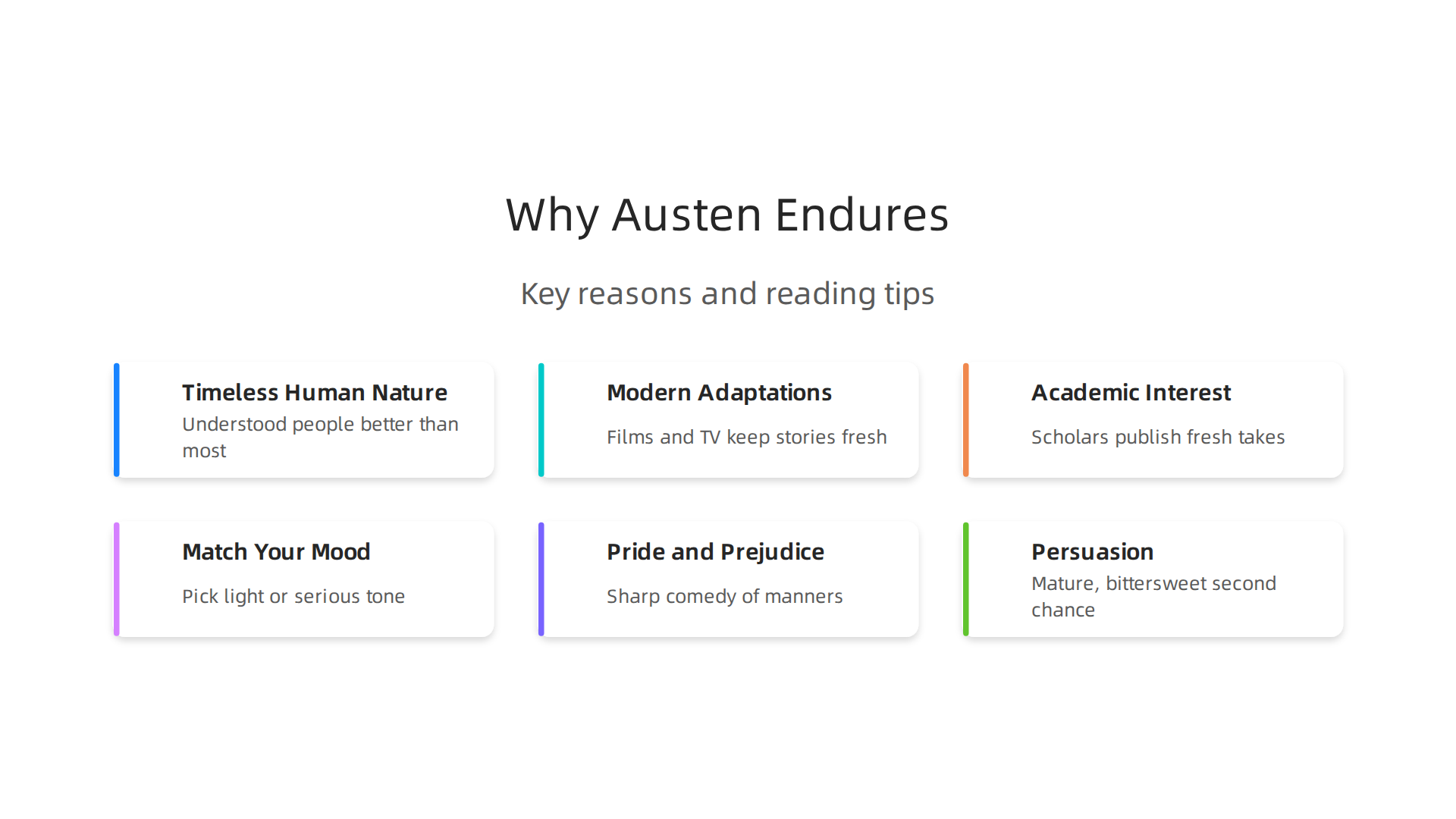
Timeless human nature. Austen did not write about corsets and carriages. She wrote about how we act when we want something, how we hurt the people we care about, and how we eventually learn to see ourselves clearly. Those themes never get old. In fact, the 2026 State of Reading Report from Fable found that Pride and Prejudice was one of the most-read free classics of the year. Source That is a powerful sign that readers still crave her insights.
Modern adaptations keep the door open. Every few years a new film or TV series brings her stories back into the spotlight. Book clubs also play a big role. The Seattle Public Library’s "Reading the Classics" book group picked Emma in 2026 Source, proving these popular novels still spark lively discussion.
Academic interest is alive and well. Scholars continue to publish fresh takes on her work. The University of Chicago Press released a new guide to classic literature in 2026 that includes Austen Source, and even a public library in Wisconsin hosted a Jane Austen writers’ workshop this year Source. Her books remain some of the best books of all time to read because they reward deep study.
If you enjoy discovering why certain authors last, you might also find our article on the 10 best-selling authors of all time and the best book to start with useful.
For now, remember that Austen’s stories are not dusty relics. They are living works that help us laugh at ourselves and understand each other better. That is why they are essential.
Browse Recommendations to find your next great read.
A Complete Guide to Jane Austen’s Published Novels
Jane Austen completed six novels in her lifetime, and they make up the core of what we call her canon.
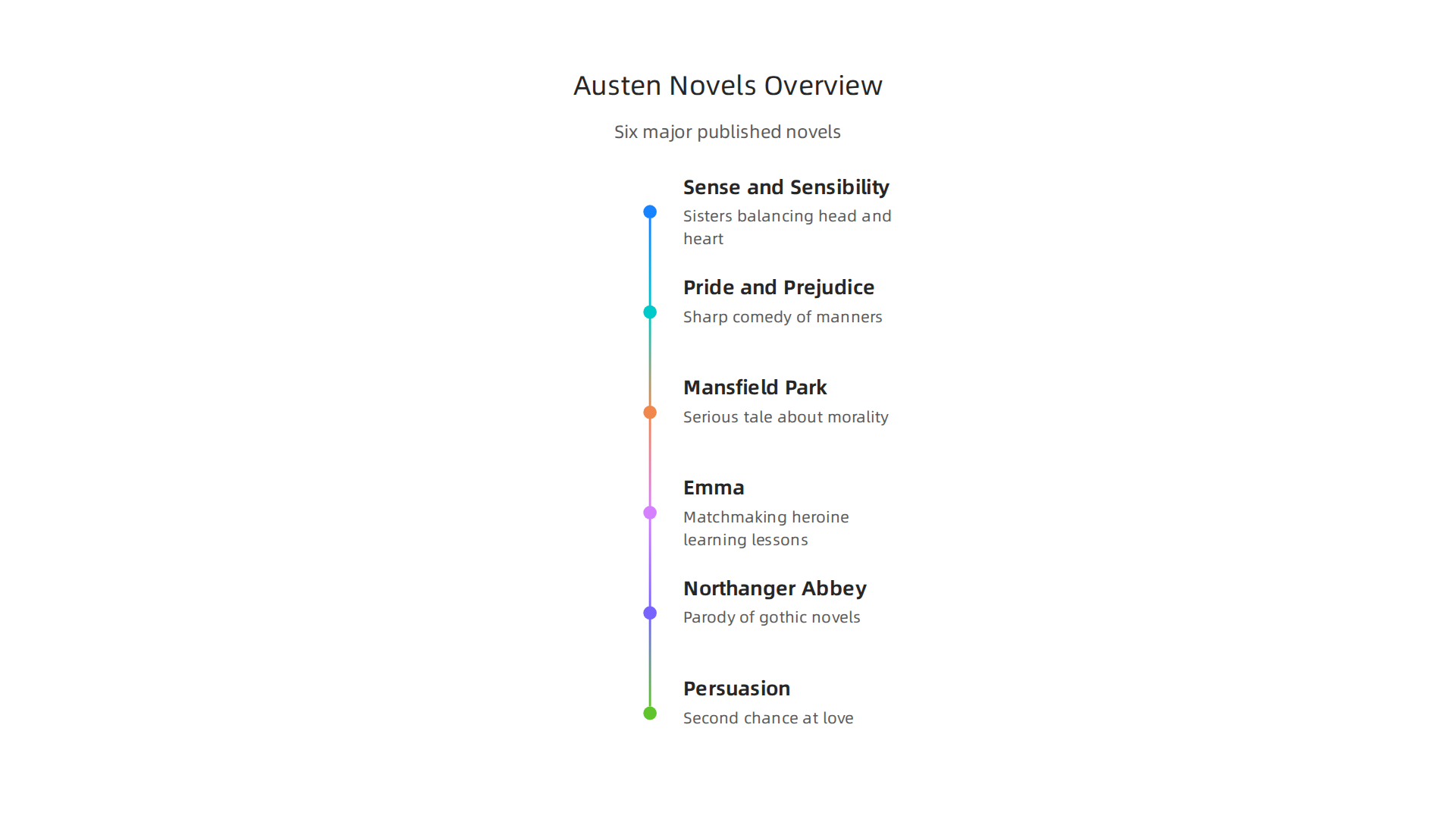
Source Each one gives you a different look at Regency society, love, and human flaws. If you are new to her work, most experts suggest starting with Pride and Prejudice because it is the most accessible and funny. Source After that, you can explore the rest.
Here is a quick reference table to help you choose.
| Novel | Publication Year | Main Character | Quick Take |
|---|---|---|---|
| Sense and Sensibility | 1811 | Elinor and Marianne Dashwood | A story of two sisters learning to balance head and heart. |
| Pride and Prejudice | 1813 | Elizabeth Bennet | The most loved of all jane austen books; a sharp comedy of manners. Source |
| Mansfield Park | 1814 | Fanny Price | A quieter, more serious tale about morality and belonging. |
| Emma | 1815 | Emma Woodhouse | A rich, matchmaking heroine who learns a few hard lessons. |
| Northanger Abbey | 1817 (posthumous) | Catherine Morland | A playful parody of gothic novels. |
| Persuasion | 1817 (posthumous) | Anne Elliot | A mature, bittersweet second chance at love. |
These are some of the best written books of all time because they still feel true today. If you want to understand why classic stories endure, check out our guide on why timeless classic novels are the best books to read in 2026.
Pick the one that calls to you, and enjoy the journey.
Pride and Prejudice
If you have heard of only one Jane Austen book, this is probably it. Pride and Prejudice (1813) is her most beloved novel, and for good reason. The story follows Elizabeth Bennet, a sharp, independent woman who refuses to settle for a marriage of convenience. She challenges the social rules of her time, and her quick wit makes her one of the best written characters in all of literature.
The opening line is one of the most quoted in English: "It is a truth universally acknowledged, that a single man in possession of a good fortune, must be in want of a wife." From there, the book delivers sparkling dialogue, a slow-burn romance with the proud Mr. Darcy, and plenty of humor. Experts recommend this novel as the perfect starting point because the comedy and drama feel fresh even today.
If you want to see where Austen ranks among the all-time greats, check out our list of the 10 best selling authors of all time and the best book to start with. And if you are hungry for more stories like this one, browse our recommendations for your next great read.
Sense and Sensibility
Sense and Sensibility was Jane Austen’s first published novel, released in 1811. It centers on the Dashwood sisters: Elinor, who stands for sense and self-control, and Marianne, who follows sensibility and raw emotion. The book explores how they cope with love and financial hardship after their father dies. Austen’s exploration of the tension between head and heart feels just as relevant today.
Fun fact: Austen originally drafted this story as a series of letters. That early form helps explain the intimate, personal tone of the sisters’ perspectives. If you love character-driven family drama, this is one of the best books of all time to read. For more classic picks, see why timeless classic novels are the best books to read in 2026.
Want more stories like this? Browse our recommendations for your next great read.
Emma
Next in the lineup of Jane Austen books is Emma, published in 1815. This comedy of manners centers on Emma Woodhouse, a wealthy young woman who thinks she knows what’s best for everyone else but often gets it wrong. Austen uses her signature free indirect discourse here, letting us step inside Emma’s thoughts while still seeing her faults clearly. Many readers consider it one of the best books of all time to read because of its sharp character development and perfectly woven plot. It’s no surprise that Emma is often listed among the six canonical Austen novels that define the author’s legacy. For more insights on authors who have shaped literature, see our guide on the 10 best-selling authors of all time.
Mansfield Park
Now we move to one of the more serious titles in the lineup of jane austen books. Mansfield Park, published in 1814, is often seen as Austen’s most morally complex novel. The story centers on Fanny Price, a quiet and poor young girl who goes to live with her wealthy relatives at Mansfield Park.
Fanny is a very different kind of heroine compared to the lively Emma Woodhouse or the witty Elizabeth Bennet. She is shy, thoughtful, and deeply principled. Austen uses Fanny’s perspective to explore heavy themes like morality, the wrongs of slavery, and the struggle of social mobility. This makes it one of the best written books of all time for readers who enjoy deeper psychological drama over light comedy.
Many people consider Mansfield Park Austen’s most serious work. It is definitely one of the best books of all time to read if you want to see her tackle difficult questions about right and wrong. For more on why classic stories like this still matter today, check out our guide on why timeless classic novels are the best books to read in 2026.
If you are ready to dive into these popular novels but want help picking your next title, browse recommendations to find the perfect match for your reading taste.
Northanger Abbey
After the heavy moral questions of Mansfield Park, here comes something completely different. Northanger Abbey is Jane Austen’s lightest and most playful novel. It is actually a parody of Gothic romance novels, which were hugely popular in her day.
The heroine, Catherine Morland, is a young girl with a big imagination. She loves reading scary Gothic stories. So when she visits Northanger Abbey, an old and mysterious house, she lets her imagination run wild. She starts believing the house has dark secrets straight out of her favorite books. The fun of the story comes from watching Catherine learn to tell the difference between fiction and real life.
Here is an interesting fact about this book. Austen wrote Northanger Abbey early in her career, around 1798. But it was not published until after her death in 1817, making it one of the last of her popular novels to reach readers. It is a warm, funny story about growing up, and it shows a side of Austen you do not see in her other works.
If you enjoy stories that lovingly poke fun at other books, you might also like our guide to books like Percy Jackson after you finish that series.
Ready to find your next read? Browse recommendations to discover books that match your taste.
Persuasion
Northanger Abbey is light and playful, but Persuasion takes a different turn. Many readers consider this Jane Austen’s most mature novel. It deals with second chances and lost love, themes that feel especially tender.
The heroine, Anne Elliot, is older than Austen’s other main characters. She is quiet, thoughtful, and carries deep regret. Eight years before the story starts, she let herself be talked out of marrying the man she loved. Now he is back, successful and still single. Watching them find their way back to each other is powerful and emotional.
Austen wrote this book near the end of her life. The tone is more autumnal and reflective. It is not as funny as Pride and Prejudice, but it has a quiet wisdom that hits harder as you get older. This is one of the most beloved of the six novels in the Jane Austen canon, and it often appears on lists of the best books of all time to read.
If you enjoy thoughtful stories about growing older and learning from mistakes, you might also like our guide to timeless classic novels that still feel fresh today.
Ready to find more books that match your taste? Browse recommendations to discover your next favorite read.
Understanding Austen’s Narrative Techniques and Themes
Austen’s ability to make us feel Anne’s quiet regret in Persuasion comes from a clever writing trick. She pioneered a technique called free indirect discourse, where the narrator blends into the character’s voice. You almost hear the heroine thinking inside the story. The Jane Austen’s House museum explains how her third person narrator has full access to a character’s thoughts and feelings, creating a close, intimate reading experience.
This method works hand in hand with her sharp social critique. Austen constantly questions the rules of class and gender in her world. She uses irony, especially verbal and situational irony, to point out social hypocrisy without sounding preachy. Scholars note that these ironic layers run through all of her best known jane austen books, making them feel both funny and serious at the same time.
That mix of warmth and wit is one reason her novels remain among the best books of all time to read. They teach you to look beneath polite surface conversations. If you want to explore other authors who use similar storytelling magic, check out our guide to other popular novels with sharp narrative voices.
Ready to find more books that make you think? Browse recommendations to discover your next thoughtful read.
Irony and Social Commentary
Now let’s get into the real engine of Austen’s wit: irony. She doesn’t just tell you a character is foolish. She lets the character’s own words and actions reveal it. This is what makes her books feel so alive and funny, even today.
Austen uses different kinds of irony all at once. Verbal irony is when a character says the opposite of what they mean. Narrators often undercut pretentious people with a dry, quiet remark. Situational irony happens when things turn out the opposite of what anyone expected. These layers of social critique let Austen point out hypocrisy without ever sounding preachy. As one study notes, her use of verbal irony and narrative voice forms the backbone of her understated critique of social conventions.
This clever trick is a big reason why her novels are considered among the best written books of all time. They teach you to look past surface conversation and spot the real drama underneath.
If you enjoy stories that mix sharp humor with deep character work, you might also like some of the other timeless classic novels that use similar techniques. And if you want a modern series that brings that same witty, thoughtful energy to science fiction, you may want to View Series which is built for fans of smart, character driven comedy.
Marriage and Money
Now here is where Austen’s irony really hits home. In her world, marriage is both a romantic dream and a hard financial deal. She shows this tension in almost every story.
For women in Austen’s time, getting married was often the only way to stay safe and secure. A woman without money had very few choices.

Austen’s plots explore how women depended on marriage for social standing and economic survival. This is a key theme in her work, and it makes her books feel just as real today.
The best written books of all time, like Austen’s, don’t shy away from this truth. They let you see the struggle between love and money from every angle. That is why popular novels like Pride and Prejudice still feel so fresh.
If you love stories where social rules shape love and life, you might also enjoy other timeless classic novels that tackle big human questions. And if you want to find more books with that same sharp, witty feel, head over to our blog for curated recommendations.
How to Choose Your Next Jane Austen Book
So you know Austen’s world is full of love, money, and sharp humor. Now the question is: which jane austen books should you pick up first or next?
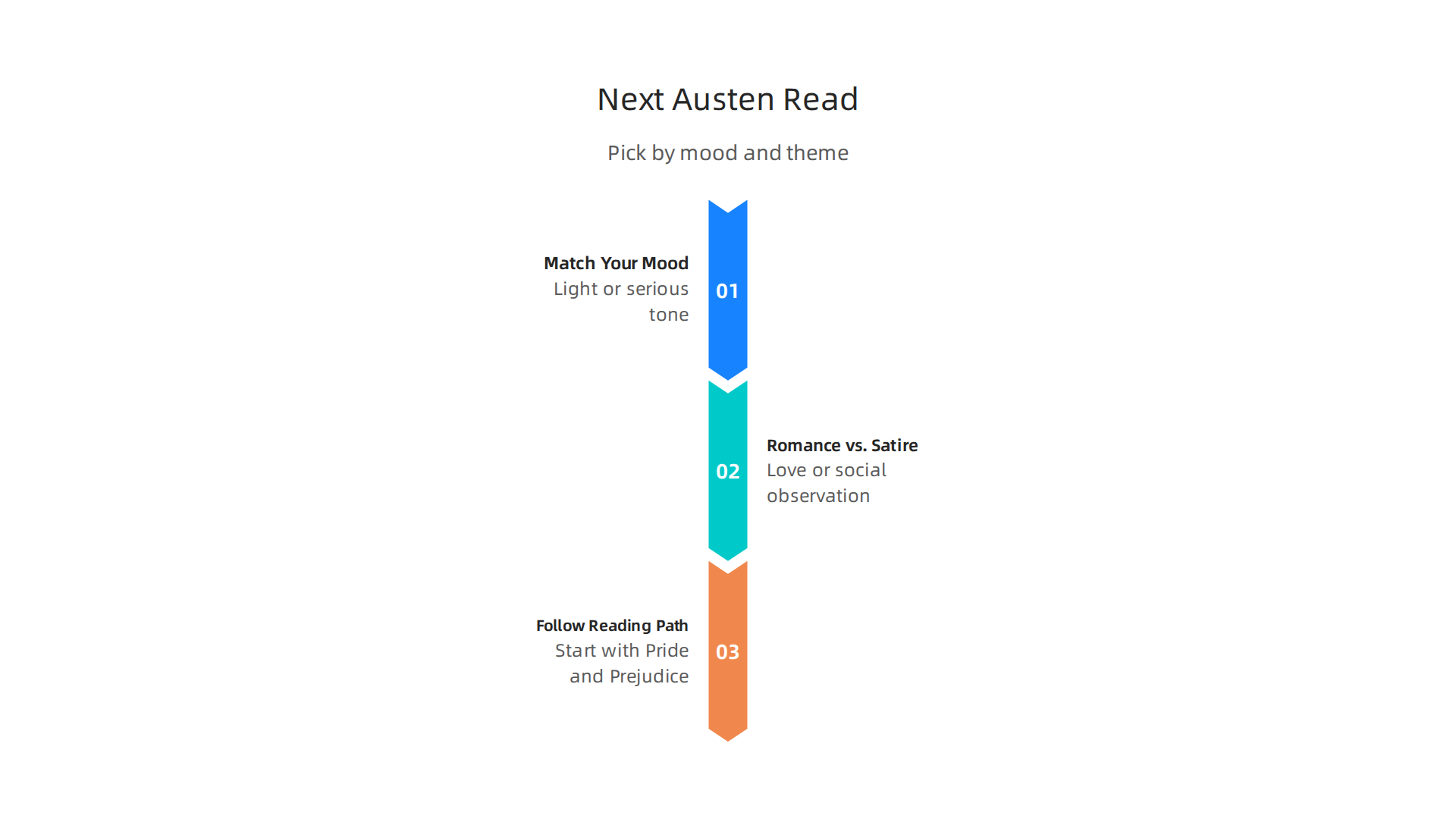
The answer depends on your mood and what kind of story you want.
Match your mood to the tone. Some Austen novels are light and playful. Pride and Prejudice and Northanger Abbey are witty and fast, perfect if you want a fun read with a happy ending. Other books lean more serious. Persuasion is her most mature novel. It deals with regret, second chances, and quiet emotion. If you’re in a reflective mood, start there. The Carnegie Library guide calls Persuasion “the last novel fully completed by Austen,” and it shows a writer at her most thoughtful.
Consider romance versus social satire. All of Austen’s books mix love with sharp observations about society. But some tilt more toward romance (like Sense and Sensibility), while others, like Emma, are full of comedic mistakes and social rules. If you enjoy stories where characters misunderstand each other in funny ways, Emma is a great choice. If you want a deeper look at how women’s choices were shaped by money and status, almost any Austen novel delivers. Literary scholars have even used ideas like “sexual selection” to explore the complex dynamics in her books, showing how every decision is layered.
Follow a simple reading path. If you are new to Austen, Pride and Prejudice is the best place to begin. It is her most popular novel and introduces all her key themes. After that, try Persuasion for a more mature voice or Emma for comedy. If you have already read a few, go back and explore Northanger Abbey for a playful parody of gothic novels.
Austen’s work is on every list of the best written books of all time. These popular novels stay fresh because they capture real human feelings. If you want more classic recommendations that feel just as alive, check out our guide to the best books of all time to read in 2026.
Continue your reading journey with our Browse Recommendations for more handpicked favorites.
Jane Austen’s Influence on Modern Literature and Pop Culture
Austen didn’t just write great books. She changed how stories are told. Her smart, funny way of looking at love, money, and human weakness still shapes the stories we love today. In fact, popular novels from authors like Zadie Smith and Curtis Sittenfeld borrow Austen’s tricks. They use her sharp eye for social rules and her clever twists on romance. Sittenfeld’s Eligible moves Pride and Prejudice to modern Cincinnati. It works because Austen’s ideas about pride and family pressure never get old.
You see Austen everywhere in pop culture too. Clueless brings Emma to a 1990s high school. Bridget Jones’s Diary pulls straight from Pride and Prejudice.

Even the 2026 reading list from the Seattle book group includes Emma, proving book clubs still turn to her for discussion. And the 2026 State of Reading Report showed Pride and Prejudice was one of the most-read free classics that year. That’s not an accident. Her stories feel alive because they’re about real people making real mistakes.
Her writing style also taught modern authors how to tell a story without jumping inside every character’s head. Instead, she lets conversations and small actions reveal everything. That technique shows up in books by writers who put her on their list of best written books of all time.
If you want to see how classic stories stay fresh, check out our guide to why timeless classic novels are the best books to read in 2026. And when you’re ready for your next great read, browse our recommendations for handpicked titles that match your taste.
Where to Find Authentic Recommendations and Community
So you just finished your first Jane Austen book. Maybe Pride and Prejudice or Emma. Now you want more stories with the same wit, smart characters, and sharp social observations. But where do you look?
Generic algorithms from big bookstores will keep feeding you the same popular novels. They don’t know what you really love about Austen. That’s why you need human-curated recommendations. Real people who understand why her style still matters.
Start with expert communities. The Jane Austen Society of North America offers scholarly articles, discussion groups, and reading lists.
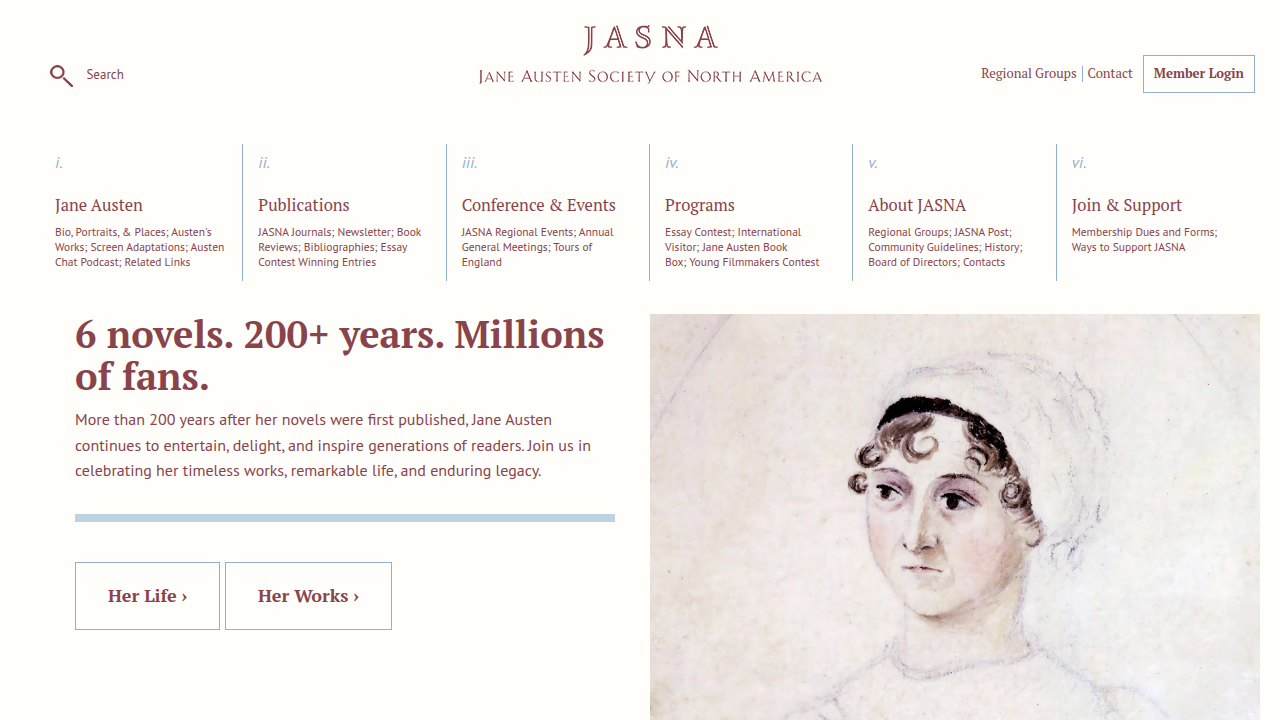
You’ll find deep analysis that explains exactly what makes her best written books of all time so special. Libraries also step in. The Carnegie Library guide to Persuasion shows how a trusted institution can help you appreciate her final completed novel.
Niche online spaces work too. LibraryThing has user-created lists full of books similar to Austen’s. Subreddits like r/janeausten let you ask real readers for their favorites. These communities share not just titles but why they love them. That context matters.
Look for sources that are honest about their biases. A good recommendation platform tells you why a book made the list. If you’re hunting for the best books of all time to read, you want guides that explain their thinking, not just push bestsellers.
At Fiction And Fantasy Books, we do exactly that. We group authors and titles by what makes them special. For instance, our guide to the 10 best-selling authors of all time shows you where to start with each writer. It’s the same care that goes into every jane austen books recommendation we make.
When you want real, thoughtful suggestions, skip the algorithm. Join a community that loves the books as much as you do. Then let them show you what to read next.
Browse Recommendations for handpicked titles across fiction, fantasy, and sci-fi. Your next favorite story is waiting.
Historical Context: The Regency Era in Austen’s Novels
Now that you know where to find recommendations, let’s talk about the world behind Austen’s popular novels. Understanding the Regency era changes how you read her stories.

Austen wrote during the Regency period in British history. This era spanned roughly from 1795 to 1837. All six of her completed novels were published during this time. A look at the definition of the Regency era shows it was a time of strict social rules and major change.
Why does this matter for you as a reader? Because her plots are not just love stories. They are about survival. Women could not easily inherit property. They had to marry well to stay safe. The historical context of Pride and Prejudice shows how the legal system and class structure gave every conversation real weight. Every dinner party and dance had meaning.
Many people think Austen ignored big world events. But the Napoleonic Wars appear quietly throughout her books. Soldiers and sailors show up everywhere. Think about Wickham in the militia or Captain Wentworth in Persuasion. The ongoing events of the Napoleonic Wars created the setting for her stories. She wrote about how war affected families at home.
Understanding these constraints helps us see her genius. She wrote sharp, witty stories about everyday people that captured the biggest issues of her time. That is why her books are some of the best books of all time to read. They work on every level.
When you read with context, every marriage proposal carries real weight. You see why these jane austen books are considered the best written books of all time.
Browse Recommendations for handpicked titles across fiction, fantasy, and sci-fi. Your next favorite story is waiting.
Collecting Rare and First Editions of Jane Austen
Once you understand the world Austen wrote about, you might find yourself wanting to hold a piece of that history. Collecting rare and first editions of her books is a passion for many readers. It is also a way to own something truly special.
First editions of Austen’s novels are among the most sought-after items in the literary world. A first edition of Pride and Prejudice from 1813 can sell for thousands of dollars. These books are considered some of the best written books of all time. Owning a piece of that legacy is a thrill for collectors.
What makes one copy worth more than another? Three main factors come into play.

Condition is the biggest one. A book with original boards, clean pages, and no major damage is worth much more than a worn copy. Provenance matters too. Was the book previously owned by someone famous? That adds value. Finally, binding makes a difference. Original cloth or leather bindings are prized over later replacements.
So where do you find these treasures? Do not just browse random used bookstores. Stick with reputable auction houses like Christie’s or Sotheby’s. Specialized rare book dealers are also excellent sources. They authenticate items and offer guarantees. This gives you peace of mind.
Collecting these popular novels in their original form connects you directly to the Regency world we just explored. It is the closest you can get to Austen herself.
If this has sparked your interest in timeless reading, check out our list of the best books of all time to read. And for more handpicked titles across fiction and fantasy, Browse Recommendations. Your next favorite story is waiting.
Summary
This article is a practical, reader-friendly guide to Jane Austen’s six major novels and why they still matter in 2026. It explains what makes Austen timeless—her keen observations of human behavior, social games, and sharp irony—and describes each novel’s tone, main character, and best reading fit so you can choose where to start. The guide recommends Pride and Prejudice as the most accessible entry point, then lays out paths through comedy, moral seriousness, and mature romance with Persuasion. It also covers Austen’s narrative tricks like free indirect discourse, the recurring themes of marriage and money, and her continuing influence on modern books and adaptations. For collectors, the article outlines what raises the value of first editions and where to look for authentic copies. Finally, it points readers to communities, library guides, and curated recommendation lists to help build a thoughtful reading plan and discover more books like the ones they loved.