
Charles Dickens Books Why They Still Matter And Where To Begin
Overview
Why 19th-Century Literature Still Matters (and why Dickens is central)
Have you ever picked up an old book and wondered if it would still speak to you today? Actually, many novels from the 1800s, often called 19th-century novels, are still very important in 2026. These stories help us understand not just how people lived long ago, but also many big ideas that are still true now.

Things like fairness, poverty, and how people treat each other haven’t really changed that much. These books let us step into another time and see the world through different eyes.
Among all the great writers from that time, Charles Dickens stands out. He is like a friendly guide into the Victorian era, a key gateway author whose stories are loved by millions. When we talk about classic literature, the name Charles Dickens books comes up again and again. His books explore important social problems, such as social injustice and the tough lives many people faced during his time. His writings often show how different parts of society, from the very poor to the very rich, lived side by side The Portrayal of Class and Social Mobility in Charles Dickens’ Great Expectations. You can see these big themes, like class struggles and issues with unfair systems, woven throughout his many works Exploring Social Criticism and Class Struggles in Dickens.
Even though he wrote over a hundred years ago, the themes in Charles Dickens books, like kindness, greed, and hope, are still very real for us. If you’re looking to explore the world of classic fiction, starting with him is a fantastic choice. His stories are full of lively characters and exciting plots that can keep you turning pages. You might even find them to be some of the why timeless classic novels are the best books to read in 2026.
In the rest of this article, we’ll help you dive into Dickens’s world. We’ll show you how to pick the best versions of his books, which of his amazing stories to read first, and what kind of adventures and characters you can expect to meet. Get ready to discover why his tales have stayed popular for so long.
So, what makes these old 19th-century novels still matter in 2026? It’s not just about old stories. The 19th century was a time of huge changes, much like today. People saw big factories grow, cities get larger, and new ideas about how society should work. These changes brought up many important questions about fairness, right and wrong, and how people treat each other. Writers back then explored these ideas in their books.
These 19th-century novels often showed the world as it was, with its bright spots and its problems. Themes like poverty, how different social classes lived, and the need for social reform were very common. Think about the rich living right next to the very poor, or how hard children had to work. These stories help us understand issues that still pop up in different ways today. For example, Charles Dickens was a master at showing these social problems, and his books often criticized unfair systems and called for change Charles Dickens as Social Commentator and Critic. His stories, and many other 19th-century novels, show us how people dealt with industrialization and changes in morality.
Another reason these books are so lasting is how they tell a story. Writers in the 1800s helped shape the way stories are told even now. They developed strong characters and exciting plots that keep you hooked. These ways of writing influenced many stories we enjoy today, from movies to modern novels. When you read charles dickens books, you’re not just reading an old tale; you’re seeing the roots of modern storytelling. Other authors like Mark Twain also captured the spirit of their time in ways that still feel fresh and important.
Many of these 19th-century novels tackle big, timeless questions about human nature, love, loss, and hope. These are feelings and experiences that never go out of style, no matter the year. Because of this, when you pick up a book from this era, like one of the many wonderful charles dickens books, you often find that the feelings and challenges of the characters are still very much like our own. Exploring these stories can feel like a conversation with the past that still has something important to say to us. If you are curious about finding more great reads, it helps to know How To Choose Classic Books You’ll Actually Love.
Charles Dickens: Life, Major Works, and Recurring Themes
Charles Dickens, born in 1812, grew up in a world of big changes in England. His life story is key to understanding why his books mean so much. When he was just 12, his family had money troubles, and his father went to a debtors’ prison. Young Charles had to leave school and work in a factory that made shoe polish. This was a very hard time for him. He saw firsthand how poor people suffered and how unfair society could be. These tough years deeply shaped his view of the world and became the fire behind many of his most famous charles dickens books Life of Charles Dickens.
Dickens became a very popular writer, known for telling stories that made people laugh, cry, and think. He wrote about the social and moral problems he saw all around him Social and Moral Issues in Christmas Books by Charles Dickens. His books often showed the lives of the poor, the struggles of children, and the problems with the justice system.
Some of his most important charles dickens books include:
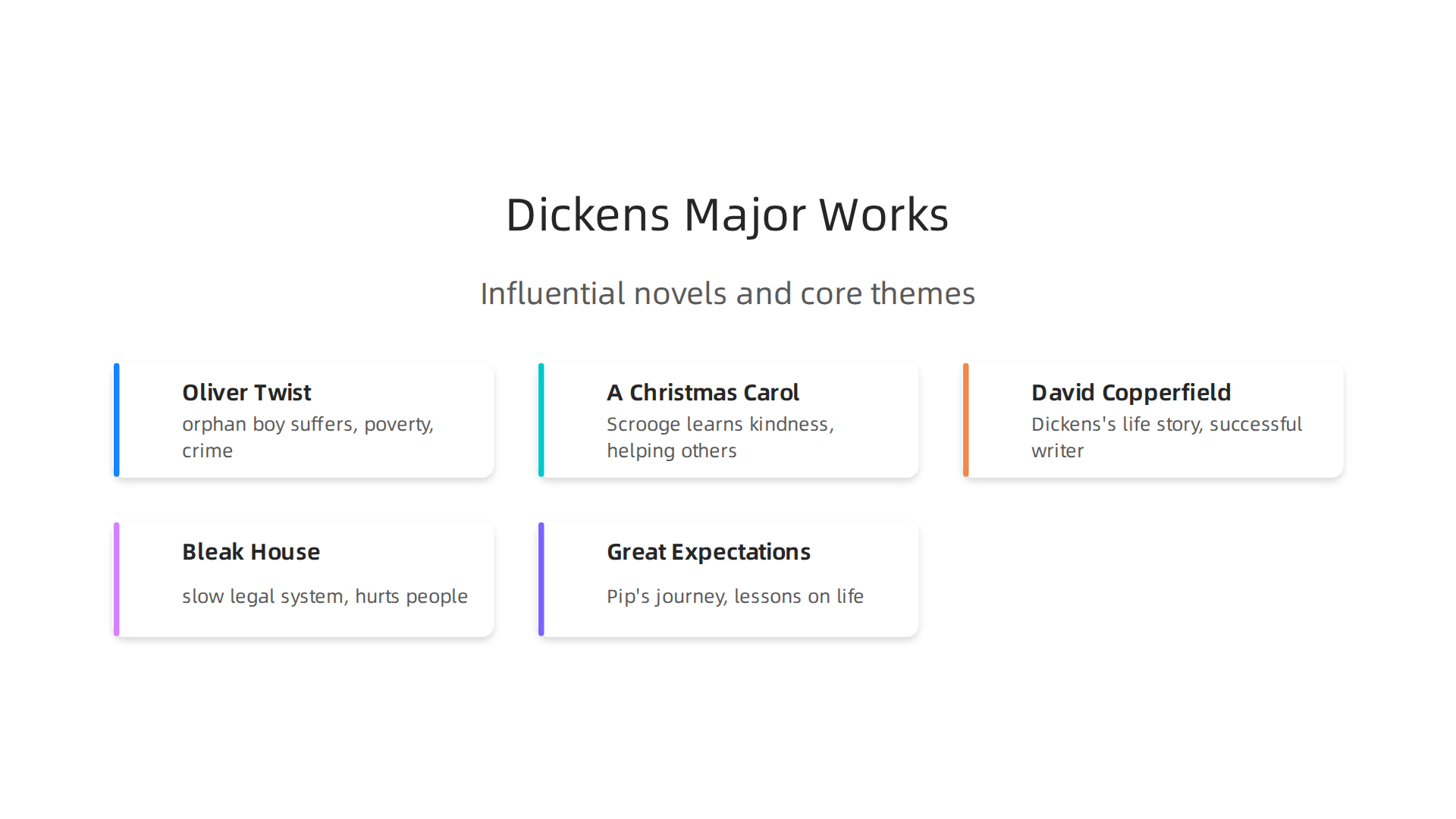
- Oliver Twist (1838): This sad story is about an orphan boy who suffers in a workhouse and then falls in with a group of child thieves in London. It shows the harsh realities of poverty and crime.
- A Christmas Carol (1843): A much-loved tale about the grumpy Ebenezer Scrooge, who learns the true meaning of Christmas after visits from ghosts. This book teaches us about kindness and helping others.
- David Copperfield (1850): Many people think this book is a lot like Dickens’ own life story. It follows David from a tough childhood to becoming a successful writer, showing many different kinds of people along the way.
- Bleak House (1853): This long story looks at the slow-moving and confusing legal system, showing how it hurts ordinary people.
- Great Expectations (1861): This popular novel tells the story of an orphan named Pip who suddenly gets a chance to become a gentleman, and the many lessons he learns about life, love, and what really matters.
These 19th century novels are full of memorable characters, both good and bad. Dickens used his stories to push for changes in society. He showed how the choices people make and the systems they live under affect their lives.
When you decide to read one of these amazing charles dickens books, you might notice there are many different versions. These are called "editions." Some editions have special notes that explain old words or customs, which can make the story easier to understand. Others might have the original drawings that came with the first printed versions, making the reading experience even richer. Choosing a good edition can really help you enjoy these classic 19th century novels more. If you’re looking for more great stories from the past, you might enjoy exploring Something Wicked This Way Comes book and more classic novels worth your time in 2026.
Other 19th-Century Authors to Read Alongside Dickens
After enjoying some fantastic charles dickens books, you might wonder who else wrote amazing 19th century novels. Many other great writers lived during his time or just before him. Their stories can give you a different look at life in those days. Exploring these authors can make your journey through 19th-century literature even richer.
Jane Austen
Jane Austen wrote her popular books a bit earlier than Charles Dickens. Her stories are mostly about love, marriage, and family matters among wealthier English people. She used smart humor and focused on how people behaved in society. While Dickens showed the struggles of the poor, Austen often showed the polite world of parties and finding a good match. Her books are less about big social problems and more about personal choices and feelings. If you like well-drawn characters and careful observation of people, you might enjoy her stories. To get started, you can find guides like Jane Austen Books: The Best Novels to Start With. She wrote about early 19th-century British life, similar to Charlotte Brontë, but they came from different family backgrounds and had different styles Jane Austen & Charlotte Brontë: Alike or Different?.
William Makepeace Thackeray
William Makepeace Thackeray was a writer at the same time as Dickens. His most famous book, Vanity Fair, tells a story without a true hero, showing some of the less kind parts of society. Many people thought of Thackeray and Dickens as the two biggest writers of their time 19th Century English Novelists: More on Chesterton on Dickens.
While Dickens often had a hopeful message, Thackeray was usually more critical. He also looked at how money and social standing affected people, but with a sharper, sometimes more cynical, view than Dickens. He was even known to have an "uneasy relationship" with Dickens, as seen in letters and notes from their time Dickens’s Literary Friends – and enemies!. If you enjoyed the social lessons in charles dickens books like Bleak House but want a story with a more critical or darkly funny twist, try Thackeray.
The Brontë Sisters (Charlotte and Emily Brontë)
Charlotte Brontë wrote Jane Eyre, and Emily Brontë wrote Wuthering Heights. These sisters wrote very passionate and dramatic stories. They often focused on strong women, deep emotions, and wild, lonely countrysides. Unlike Dickens’s busy London streets, the Brontës often set their stories in quiet, windswept places. Dickens looked outwards at society and its problems, while the Brontës looked inwards at fierce feelings and personal struggles. Jane Austen, for instance, wrote earlier than the Brontës and came from a wealthier family and a higher social standing Jane Austen Verses The Brontë Sisters. If you enjoyed the emotional journeys of characters in charles dickens books like David Copperfield, you might connect with the intense feelings in Brontë novels, but be ready for stories focused more on individual hearts than crowded cities.
Anthony Trollope
Anthony Trollope wrote many 19th century novels, especially a series about a fictional area called Barsetshire. His books are about everyday life, politics, and the church, with lots of small details about his characters. Trollope was also friends with Dickens and even helped him with some writing projects. His writing is calmer and more about carefully watching people’s ordinary lives and the unspoken rules of society. This is quite different from Dickens’s grand stories about big injustices. If you enjoy detailed character studies and a more gentle pace, Trollope offers a different look at Victorian society than the dramatic plots found in many charles dickens books.
Exploring these other 19th century novelists can really open up your understanding of the past and introduce you to many new favorites. There’s a whole world of classic stories waiting for you! Learning How to Choose Classic Books You’ll Actually Love can help you find your next great read among these timeless authors.
How Dickens Shaped Genre Fiction — Traces in Modern Fantasy & Sci‑Fi
After looking at other great writers from the 19th century, it’s cool to see how Charles Dickens’s influence didn’t just stay in his own time. Actually, many ideas you see in today’s fantasy and science fiction books can be traced back to the way he told stories. His charles dickens books might seem old-fashioned, but they helped shape how modern genre fiction works.
Serialized Storytelling
One big way Dickens changed things was how he released his stories. He didn’t just publish a whole book at once. Instead, he released his novels in small parts, like chapters in a magazine, over many months. This is called "serialized storytelling."
It kept readers excited and guessing what would happen next, making them eager for the next part. Think about how popular TV shows keep you hooked week after week, or how many big fantasy series come out one book at a time. Dickens started that trend! This made his charles dickens books a talked-about event.
Vivid Settings and Ensemble Casts
Dickens was also really good at making his cities feel alive. His London wasn’t just a place; it was almost like a character itself, full of dark alleys, busy streets, and hidden corners. This idea of a vivid, detailed urban setting is super common in fantasy and sci-fi today. Think of sprawling futuristic cities or magical kingdoms. He also had a huge number of characters, an "ensemble cast," where many different people with their own lives and stories come together. These characters often show the many sides of society. You see this in big fantasy epics or space operas where many heroes and villains all have their own roles to play.
Tone, Satire, and Social Commentary
Beyond how he told stories, Dickens’s books also carry a special tone. He often used humor, sadness, and even a bit of darkness to talk about real-world problems. He showed how the poor suffered, how laws could be unfair, and how people struggled to find their place. This is called social commentary. Many modern fantasy and science fiction stories do this too. They use made-up worlds to comment on our own society’s problems, like poverty, inequality, or the dangers of new technology. For example, some stories use magical systems to show injustice, just like Dickens showed the harsh realities of 19th-century life. Some even say Dickens helped invent time travel in his stories or explored themes seen in science fiction today, making him integral to the genre’s history, as noted by an article on his 200th birthday Happy 200th Birthday to Charles Dickens: A Man Integral to Science …. His stories also sometimes had ghosts and strange events, showing his love for the fantastic, like in A Christmas Carol. In fact, The Encyclopedia of Science Fiction highlights that Dickens wrote "considerable fantasy" himself SFE: Dickens, Charles – The Encyclopedia of Science Fiction.
What Readers Can Gain
So, if you love to read fantasy or sci-fi books, why should you check out charles dickens books?
By reading his 19th century novels, you can see the roots of many storytelling tricks that still work today. You can learn how to build rich worlds, create memorable characters, and tell a story that keeps people hooked. Plus, his messages about society are still important in 2026. Finding new authors and expanding your reading can be a fun adventure. You can learn more about finding books for your specific tastes by looking for resources that help you find your perfect sci-fi fantasy books for adults.
If you’re eager for more imaginative tales, especially those with a funny twist, consider exploring a book that offers a strange, warm, absurd adventure. Try a Funny Sci-Fi Series to see how modern authors continue to play with genre and storytelling.
Now that you know how much Charles Dickens helped shape modern stories, you might be thinking, "Which of his charles dickens books should I read first?" It’s a great question, because diving into a 19th century novel can feel like a big step. Don’t worry, we’ve got some easy tips to help you pick the right one for you.

What to Think About Before You Start
Before you grab the first old book you see, let’s think about a few things:
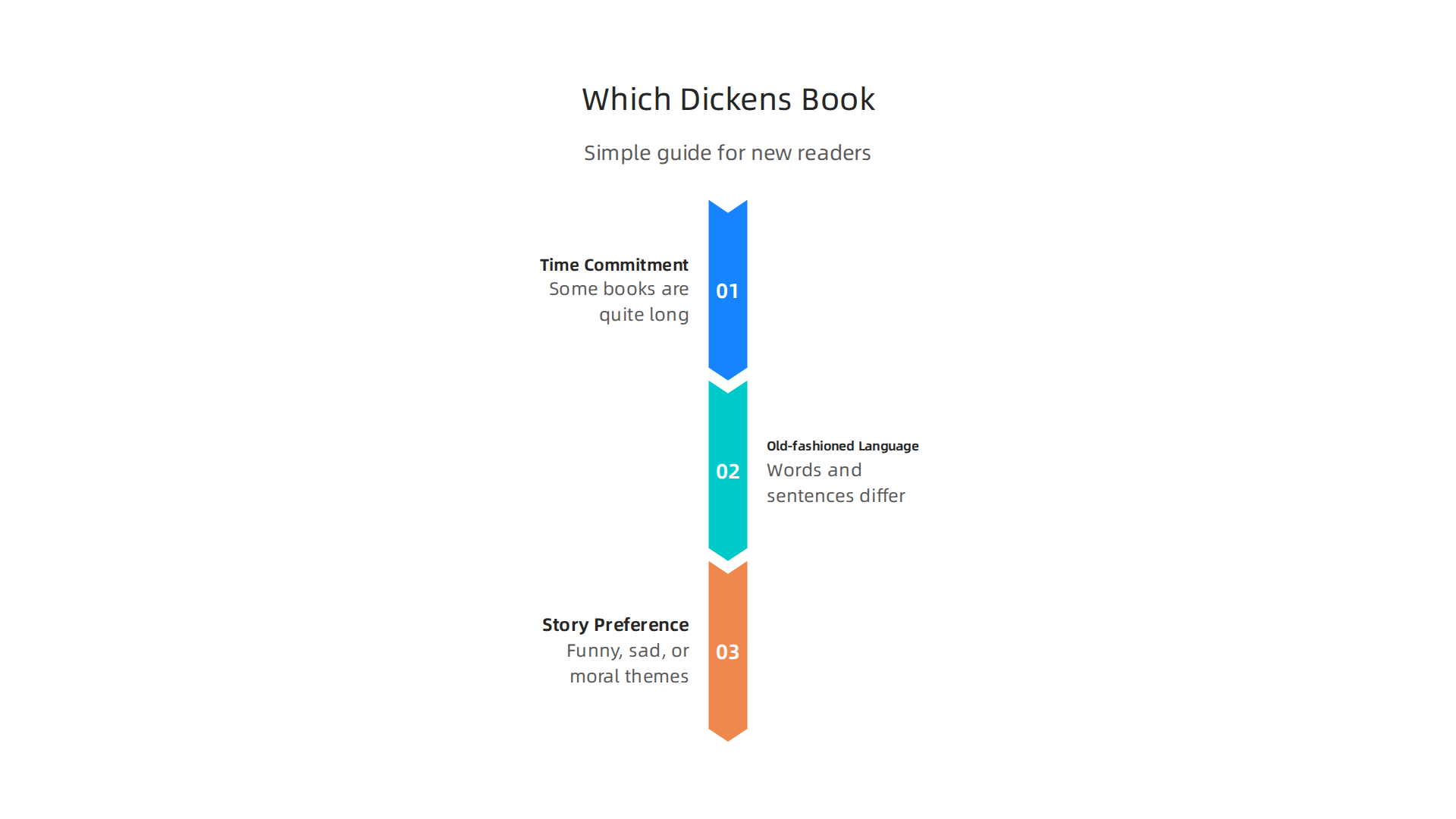
- How much time do you have? Some charles dickens books are quite long. They were often published in parts over many months, so they could get pretty detailed!
- How do you feel about old-fashioned language? Dickens wrote a long time ago. His words and sentences might be a little different from what you’re used to. It’s like learning a new way of talking, but it gets easier.
- What kind of story do you like? Dickens was great at many things. Do you like stories that make you laugh, make you sad, or make you think about right and wrong? He has stories that fit all these feelings.
Thinking about these points will help you choose a book you’ll really enjoy.
Easy Books to Start Your Dickens Journey
If you’re new to Dickens or classic 19th century novels, it’s best to start with something that’s a bit shorter and easier to follow.
- A Christmas Carol: This is probably his most famous story and a perfect first read. It’s short, heartwarming, and has a clear message. Plus, it’s not too hard to read, making it a wonderful introduction to his style.
- Oliver Twist: This book is about a poor orphan boy and has a lot of drama. It’s a bit longer than A Christmas Carol, but the story moves fast and keeps you interested. It’s also one of his earlier works, which some find more direct. The Charles Dickens Museum also suggests starting with Oliver Twist if you’re struggling with his style A Millennial’s Guide to Reading Dickens (If you’re struggling).
For Readers Ready for More
If you’ve read a classic or two before, or you’re ready for a slightly bigger adventure, try these:
- Great Expectations: Many people love this story about a young man named Pip and his journey to become a gentleman. It has mystery, love, and a fantastic cast of characters. It’s often thought of as one of his best charles dickens books.
- David Copperfield: This book is a favorite for many, including Dickens himself! It tells the story of David’s life from childhood to adulthood, with many interesting people and events along the way. It’s a longer read, but very rewarding.
Experts often share their top picks too, and you can find many lists that rank the best Charles Dickens books for every type of reader to help guide your choice 11 of the best Charles Dickens books (for every type of reader).
How to Get the Best Reading Experience
Once you pick a book, how should you approach it?
- Go for a complete edition: While abridged versions (shorter, simplified) exist, reading the full story is the best way to enjoy Dickens’s full talent.
- Don’t rush: Remember, these were often read in parts. Take your time with each chapter. You don’t have to finish it in a week.
- Look for annotated versions: Some editions have notes that explain old words or customs. This can make understanding the story much easier and more fun.
Picking a book from a different time period can be exciting. If you want more help finding old books you’ll actually like, check out resources on how to choose classic books you’ll actually love.
Need a New Genre Escape? The Ridiculous mixes comedy, sci-fi, identity, and heart. Try The Ridiculous to see how modern authors continue to play with genre and storytelling.
After choosing which Charles Dickens book to start with, your next step is finding the right version to read. There are many ways to enjoy these classic 19th century novels, and some resources can make your reading experience even better.
Types of Editions to Look For
When you pick up a Charles Dickens book, you’ll see there are different kinds of copies. Here’s what to look for:
- Annotated Editions: These are like having a helpful guide right inside your book. They come with notes at the bottom of the page or in the back. These notes explain old words, historical facts, or tricky phrases that might be hard to understand today. This can make reading charles dickens books much clearer and more fun.
- Complete Works: It’s often best to read the full story as the author wrote it. Some special collections of Dickens’s stories, like the Nonesuch Dickens, are even famous for their beautiful details and being complete Charles DICKENS Rare Books and First Editions at Bauman Rare …. These complete versions let you enjoy every word the author intended.
- Inexpensive or Free Copies: Many charles dickens books are very old, which means they are in the "public domain." This means you can often find free versions online, or very cheap paperbacks in stores. Just make sure any free online versions are easy to read and don’t have too many mistakes.
- Audiobooks: If the old-fashioned language feels a bit hard to follow with your eyes, listening to an audiobook can be a great way to enjoy a Dickens story. A good narrator can bring the characters and story to life, making the words much easier to understand.
Recommended Research Tools
To dive deeper into Charles Dickens and other 19th century novels, there are some great tools that can help:
- Online Libraries and Archives: Websites like Project Gutenberg or the Internet Archive offer many classic books for free. University libraries also have huge collections of Victorian texts and academic papers about them.
- Bibliographies: These are like special lists of books and articles written about an author or a topic. They can help you find more information if you’re writing a school paper or just really curious about Dickens.
- Videos and Podcasts: Sometimes, watching a video or listening to a podcast about a book can give you new ideas and help you understand it better. For example, some channels rank Every Novel by Charles Dickens from Worst to Best or share their personal Top 5 Ranked Charles Dickens novels. These can be fun ways to hear what others think about these classic stories.
Going Deeper with Dickens
If you find you really love the world of Charles Dickens, there are even more ways to explore and connect with his stories:
- Online Courses and Lectures: Many universities or online learning platforms offer free or paid courses about classic literature and Dickens. These can help you learn a lot from experts and get a deeper understanding of his work.
- Reading Groups: Joining a book club or an online reading group focused on 19th century novels can be a wonderful way to talk about the stories and hear different ideas from other readers.
- Explore More Classics: Once you enjoy Dickens, you might want to try other classic authors or important stories. For instance, you could explore something Wicked This Way Comes book and more classic novels worth your time in 2026. If you like tales of adventure, checking out Jack London books explore his essential works and lasting legacy could be your next step.
While Dickens offers rich historical stories, sometimes it’s nice to switch things up with something completely different. If you enjoy imaginative stories with a touch of humor, you might want to Try a Funny Sci-Fi Series.
Summary
This article explains why 19th‑century novels remain relevant in 2026 and makes the case for Charles Dickens as the era’s central, gateway author. It outlines how these books capture social change, enduring themes like poverty and justice, and storytelling techniques that still shape modern fiction. The piece summarizes Dickens’s life, his major works (A Christmas Carol, Oliver Twist, David Copperfield, Bleak House, Great Expectations), and how his personal history informs his social critique. It also compares other important contemporaries—Austen, the Brontës, Thackeray, Trollope—and shows how Dickens’s serialized style, vivid settings, and ensemble casts echo in today’s fantasy and science‑fiction. Readers will find practical advice on which Dickens titles to start with, how to choose editions (annotated, complete, audiobooks), and where to go next for more classics and resources. By the end, you’ll know which Dickens novel fits your taste and how to get the most from reading 19th‑century literature.